Showing posts with label Ham Radio Transmitter Fox Hunt. Show all posts

TORONTO CANADA Amateur Radio Jamming

TORONTO CANADA 🇨🇦 Amateur Radio Jamming

DMR Net CANADA 🇨🇦  Terminated ( abuse 2018 - 2020 )
https://dmrnet.blogspot.com/


READ all of Toronto’s abuse HERE:
http://torontorepeaters.blogspot.com/

Listen to Audio PROOF ::

🇨🇦 AUDIO of :: William Marquis VE3KUU aka former VA3HBO of SCARBOROUGH -Toronto 

Toronto CANADA HAM Amateur Radio Jamming :   I Gotta Put Andres ID In My Radio
Toronto CANADA HAM Amateur Radio Jamming :   I Set The Beam Up To Jam DMR
Toronto CANADA HAM Amateur Radio Jamming :   I Wont Jam Any More On The DMR
Toronto CANADA HAM Amateur Radio Jamming :   There Will Be Noo Canada-Wide Sunday Night Nets

Search CANADIAN callsign 🇨🇦
www.bit.ly/callsigncan

KrakenSDR

KrakenSDR

A phase-coherent software-defined radio with five RTL-SDRs

Radio Direction Finding (RDF) refers to any technique used to determine the directional bearing toward an RF transmitter.

The simplest method is to use an antenna that only receives signals from the direction in which it is pointed, then manually sweeping through 360 degrees to identify the bearing angle that receives the strongest signal. You could then do this from multiple locations and make note of where your bearings intersect. Unfortunately, this "simple" method requires a tuned directional antenna and a manual, error-prone process.

KrakenSDR videos

KrakenSDR

videos @ Youtube 

www.youtube.com/@VE3WZW


Radio Direction Finding (RDF) refers to any technique used to determine the directional bearing toward an RF transmitter.

The simplest method is to use an antenna that only receives signals from the direction in which it is pointed, then manually sweeping through 360 degrees to identify the bearing angle that receives the strongest signal. You could then do this from multiple locations and make note of where your bearings intersect. Unfortunately, this "simple" method requires a tuned directional antenna and a manual, error-prone process.

Multipath

Multipath is the arrival of a transmitted signal at a receive antenna from multiple paths due to reflections. The reflections can occur from the ground, trees, buildings, people, or whatever is around. As an example, see Figure 1. The dominant signal is often the Line of Sight (LOS) signal, which is the direct path from the receiver to the transmitter. The other arriving signals (due to reflections) are known as multipath. In some situations (particularly in urban environments), there is no line of sight signal, and all received rays are from multipath. Multipath causes significant variation in received signal - sometimes the multipath reinforces the received signal, but often it subtracts from it (a phenomenon known as fading). See also diversity reception.

Fox Hunt Amateur Radio Attenuator

Fox Hunt Amateur Radio Attenuator

Contacted John for our City Group buy #10 / 20 ++ 
#va3yyz 

🦊 - https://twitter.com/ve3wzw/status/1447252378437160960?s=21

🚫 🚷❌⛔️ - identify/terminate 🔫 the rabid dog(s) disrupting amateur radio 🦊 Toronto Canada

#attenuator 🦊 #foxhunt #jamming #Toronto #Canada #hamradio #amateurradio #ve3wzw #va3yyz


The Art and Science of Radio Direction Finding (RDF)

Radio direction finding is used to find sources of interference to any form of wireless electronic communications, including broadcast and two-way radio, television, and telephones.  It is also used to track missing or stolen cars and other property.  Search and rescue workers use it to find persons in distress.  Emergency Locator Transmitters in downed aircraft are tracked with RDF techniques.

The Art and Science of Radio Direction Finding (RDF)

N0GSG DSP Doppler RDF Kit

N0GSG DSP Doppler RDF Kit

Introduction:
Thank you for purchasing the RDF Doppler Radio Direction Finder kit Version
2.0. This kit contains six circuit boards and all the components required to
assemble them.

Enhancements :
Integrated NMEA GPS port. (The GPS is only needed for computerized mapping).
Integrated RS-232 output port ( 4800, 8, N, 1 ).
Standard Agrelo format DF output messages.
Compatible with numerous software packages such as WinAprs, WinDopp ,
APRS+SA , GPSS and others.

Major Features :
Based upon the N0GSG DSP Doppler design as featured in the November
2002 issue of QST magazine.
Utilizes two Atmel Microprocessors, Timing and Antenna switching is managed
by an ATTINY-2313 microprocessor, Signal processing and RS-232 I/O are
provided by another ATTINY-2313 microprocessor. Both are socket mounted to
allow their removal for firmware updates.
Sixteen LED’s furnish relative directional information and also indicate loss of
signal. With resolution of 22.5 degrees.
RS-232 output resolution 3.6 degrees, truncated to its integer value. For example
3.6 degrees is reported as 3 degrees, 7.2 degrees is reported as 7 degrees.


Introduction to Amateur Radio Direction Finding

Introduction to Amateur Radio Direction Finding

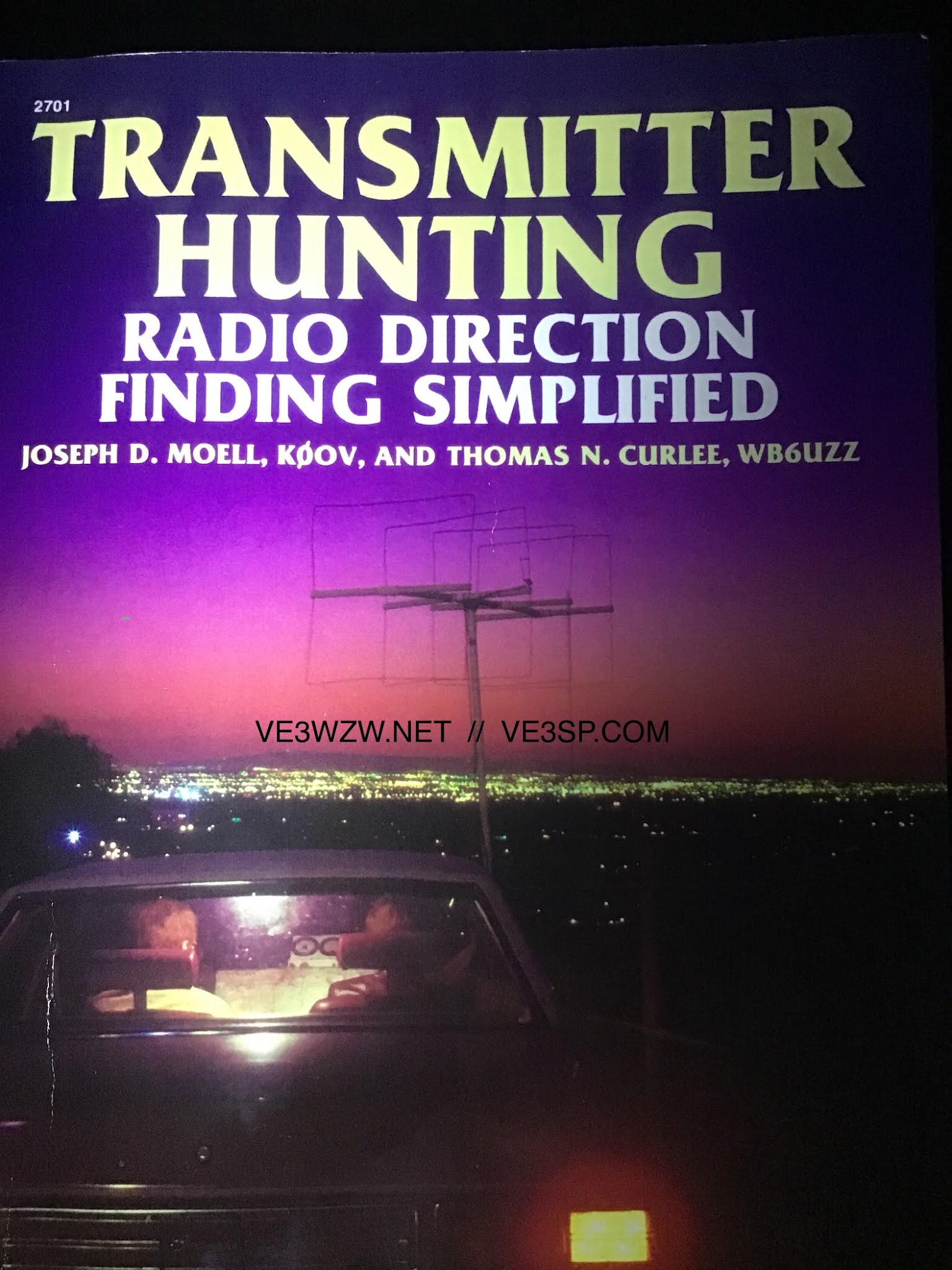
Radio direction finding is a set of skills used to find hidden radio transmitters. Amateur radio operators practice these skills in events called "foxhunts" or "t-hunts". With these skills, they are better prepared to serve their communities in a variety of emergency situations.

Amateur radio clubs worldwide sponsor foxhunts, where individuals and teams compete to find hidden transmitters. Most hunts are open, and clubs welcome new participants. On-the-hunt training and coaching are readily available.

Micro-Fox T-Hunt Transmitters

Byonics - MicroTrak

Micro-Fox T-Hunt Transmitters

Byonics carries these Micro-Fox transmitters for Hidden Transmitter Hunting, also called Fox Hunting, Bunny Hunting, or T-Hunting. These transmitters are small, self-contained, and easy to hide. They are great for on-foot or driving hunts, or as secondary transmitters after people find the primary T. Just conenct to any 2-meter SMA antenna, such as our V2 or V4 antenna, add a battery and configure with your callsign, and hide the transmitter.

Transmitter or Fox Hunting Class 101 by Byon Garrabrant
written by Todd Harrison
 
I attended the Arizona Repeater Association’s (ARA) February 2014 meeting. They had a guest speaker, Byon Garrabrant, presenting what could be called the definitive lecture on Transmitter Hunting. I have broken the lecture up into 4 parts based on content for easier viewing and reference. In general the 4 parts are:
1. What is Transmitter Hunting
2. Hiding
3. Hunting
4. Closing remarks and High Alt. Balloon Tracking.
There will be a large photo gallery after the videos below if you want to see some items in detail.
I want to thank Byon Garrabrant and the ARA for allowing this content to be distributed publicly for everyone to learn and enjoy.
You can find more about the ARA at their website: http://www.w7ara.org
You can contact Byon Garrabrant or purchase his APRS and Fox Hunting gear from his website: http://www.byonics.com
What is Transmitter Hunting or Fox Hunting All About

What is Transmitter Hunting or Fox Hunting All About

What is Transmitter Hunting or Fox Hunting All About (1 / 4)


You can find more details, links to all 4 videos and a large photo gallery on my blog posting here:
(1 / 4)
More (2 / 4)

Transmitter Hunting Basics

A look at Transmitter Hunting as if done like an old Newsreel.


ARDF (Fox Hunting)

ARDF (Fox Hunting)